Wayne Thiebaud: American Still Life
We were drawn to the Courtauld Gallery by a poster featuring the painting Three Machines from 1963 — striking, playful, and intriguing. Wayne Thiebaud’s exhibition was very well attended that day. Online tickets were already sold out, but luckily we managed to buy them at the gallery.
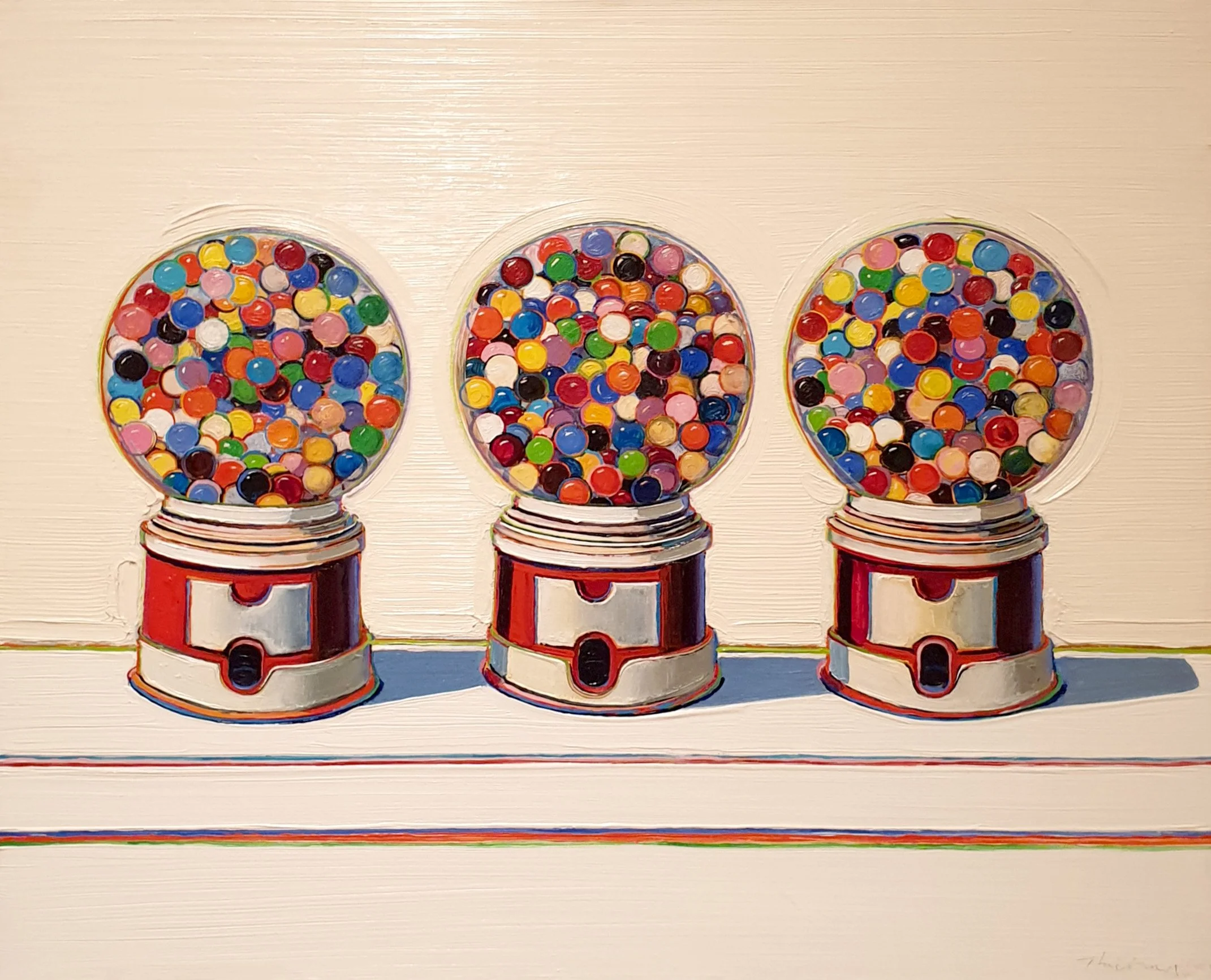
“Three Machines” Wayne Thiebaud, 1963
Because of the large number of visitors, it took some patience to find a spot where the paintings could be viewed without obstruction, but despite that, I was happy to see so much interest. Especially in a temporary exhibition!
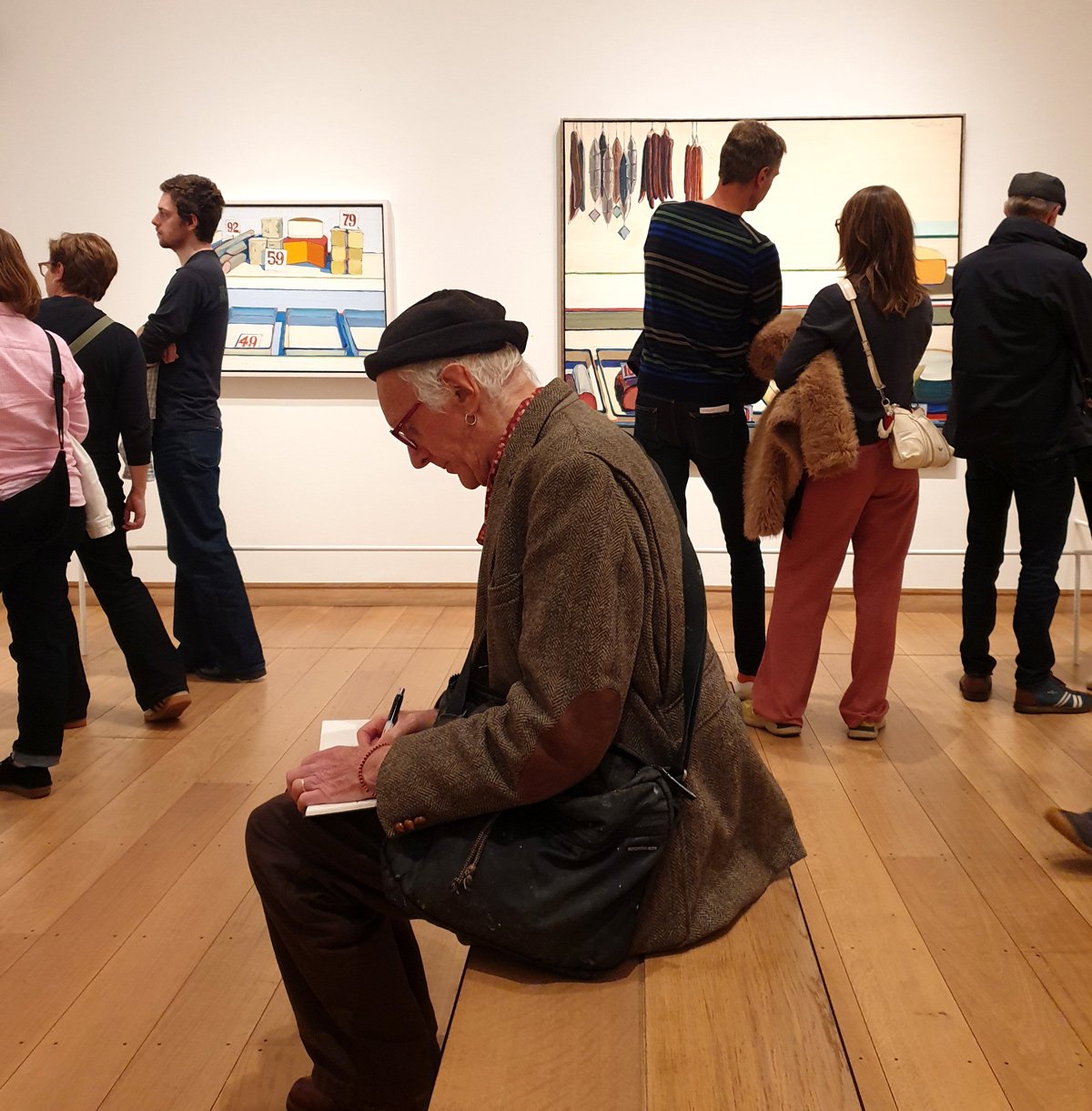
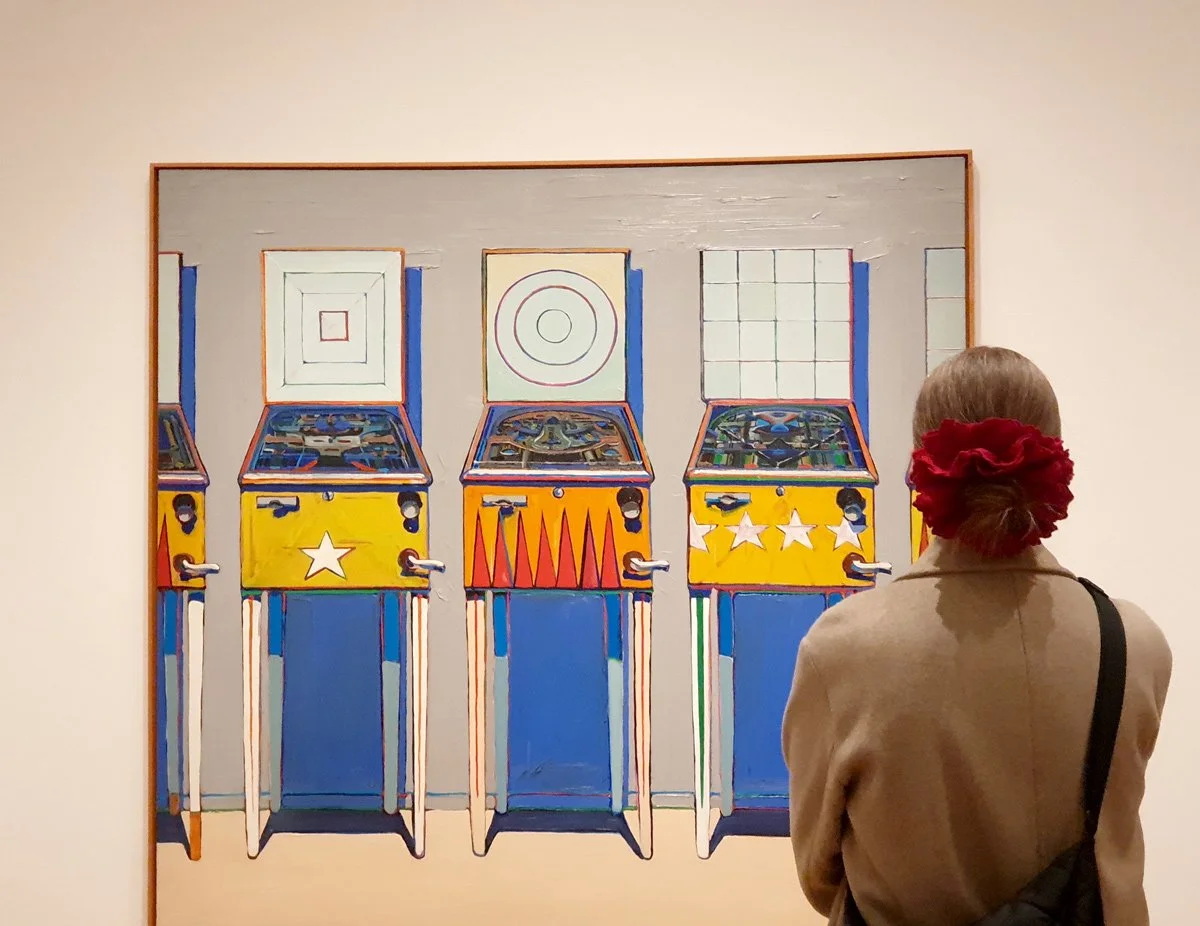
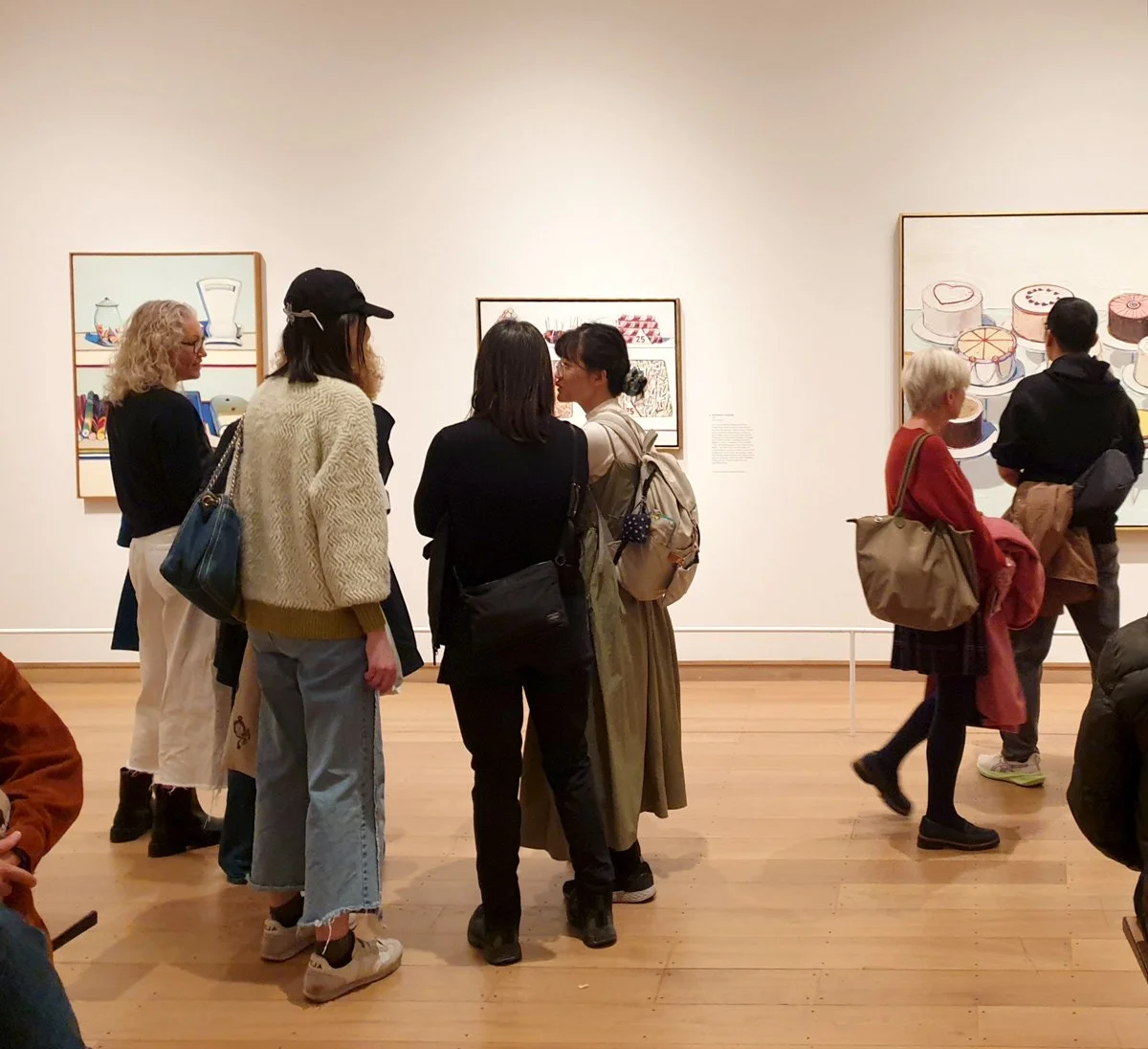
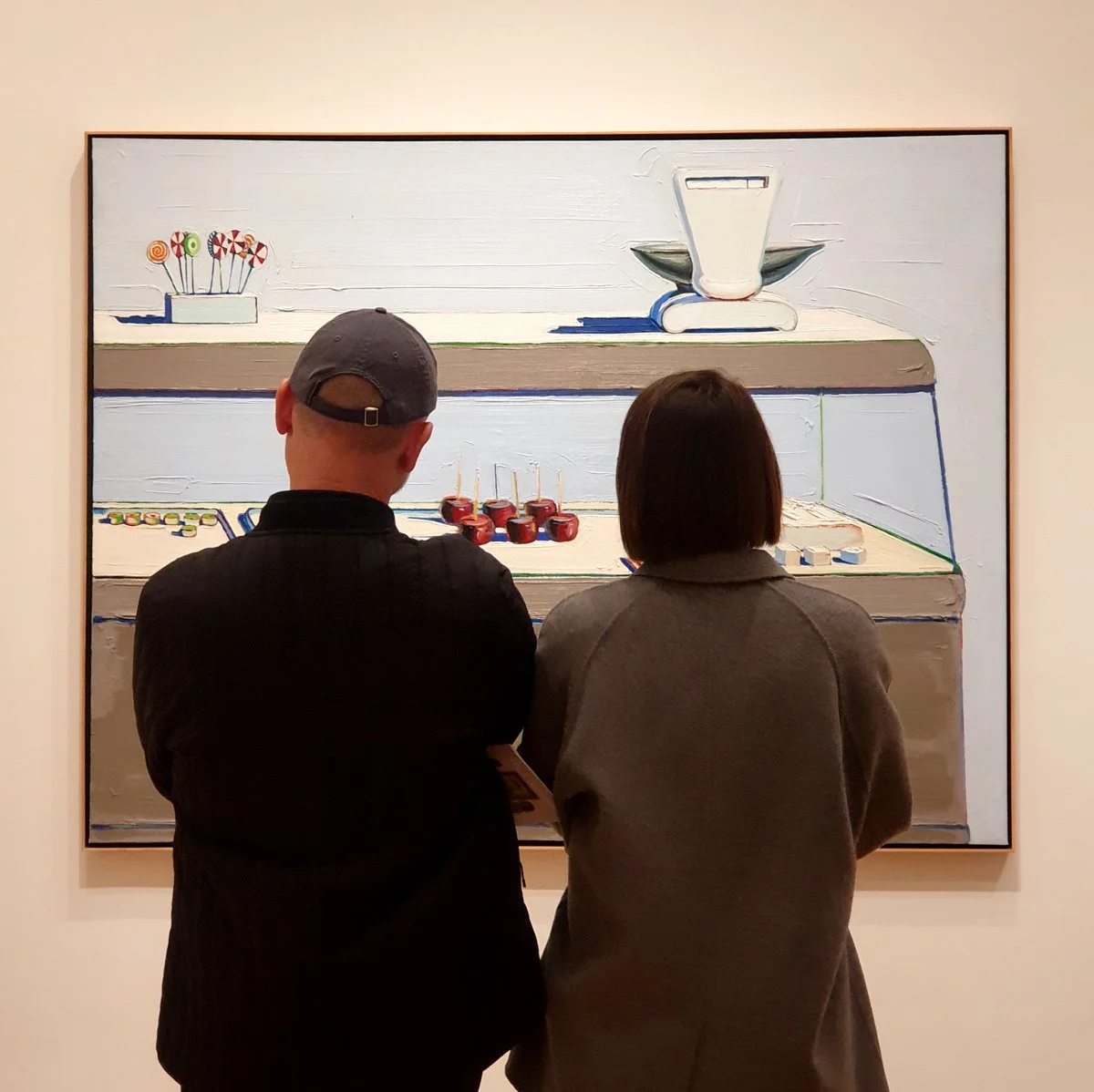
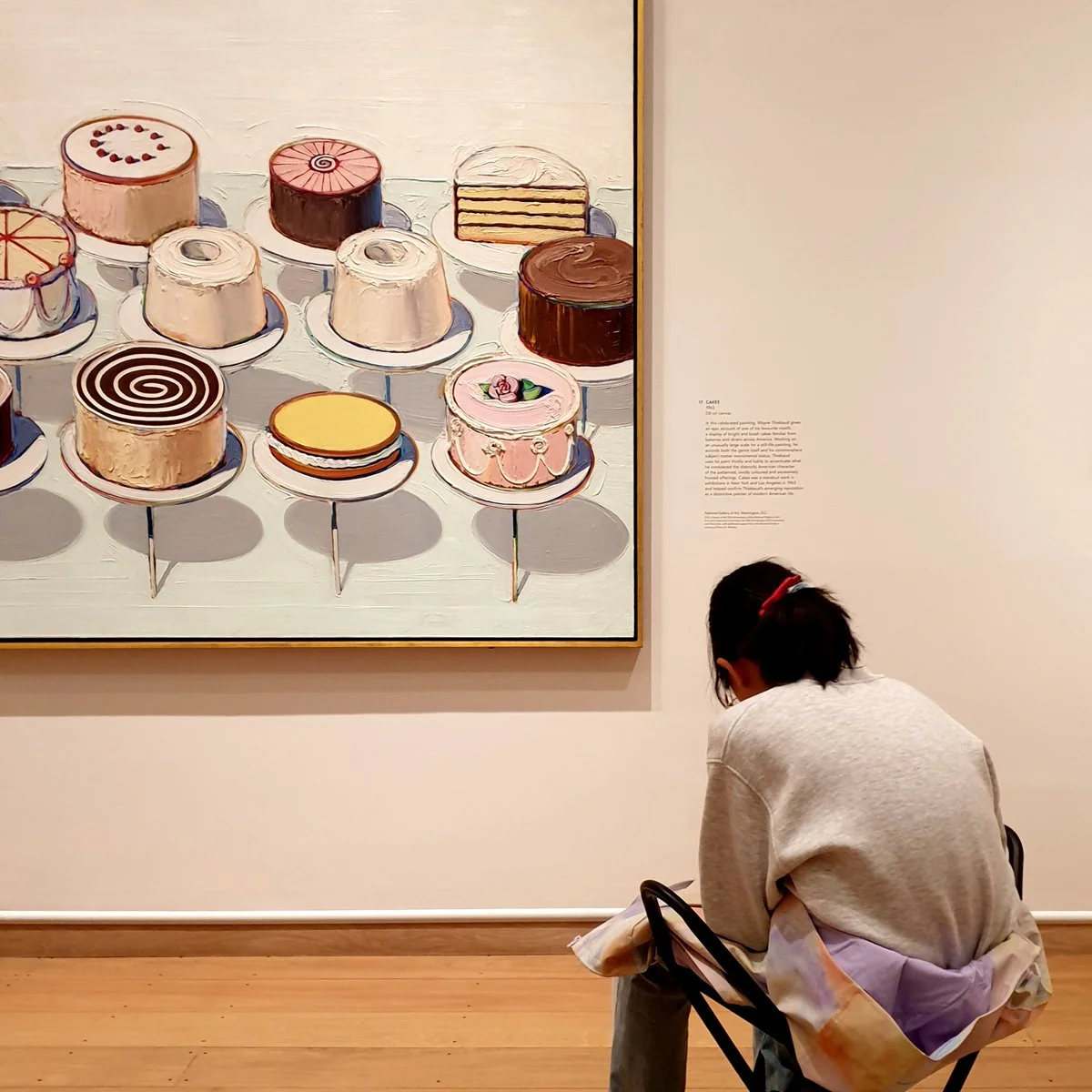
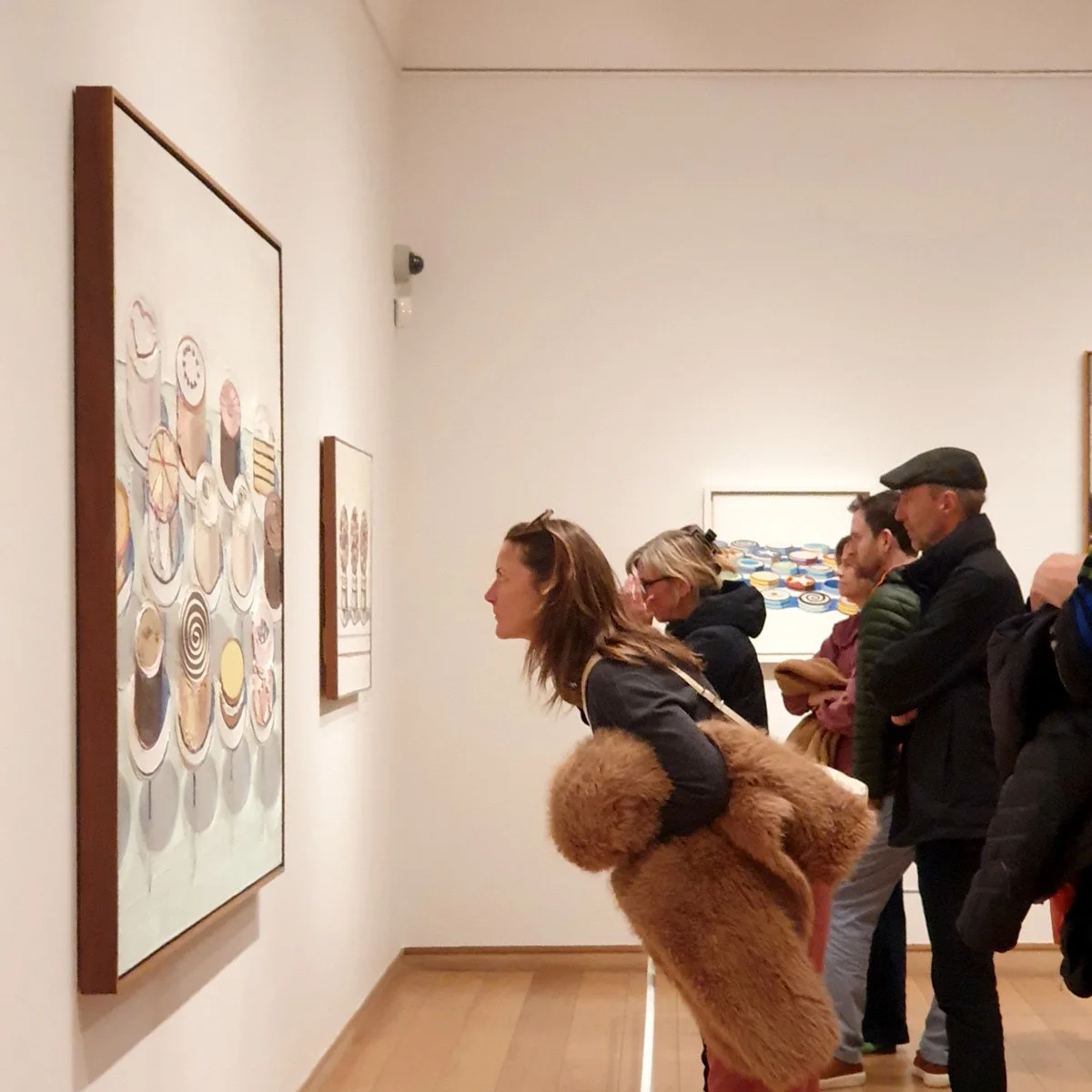
As part of the permanent collection, the gallery also showed Thiebaud’s prints and drawings, which were definitely worth seeing.
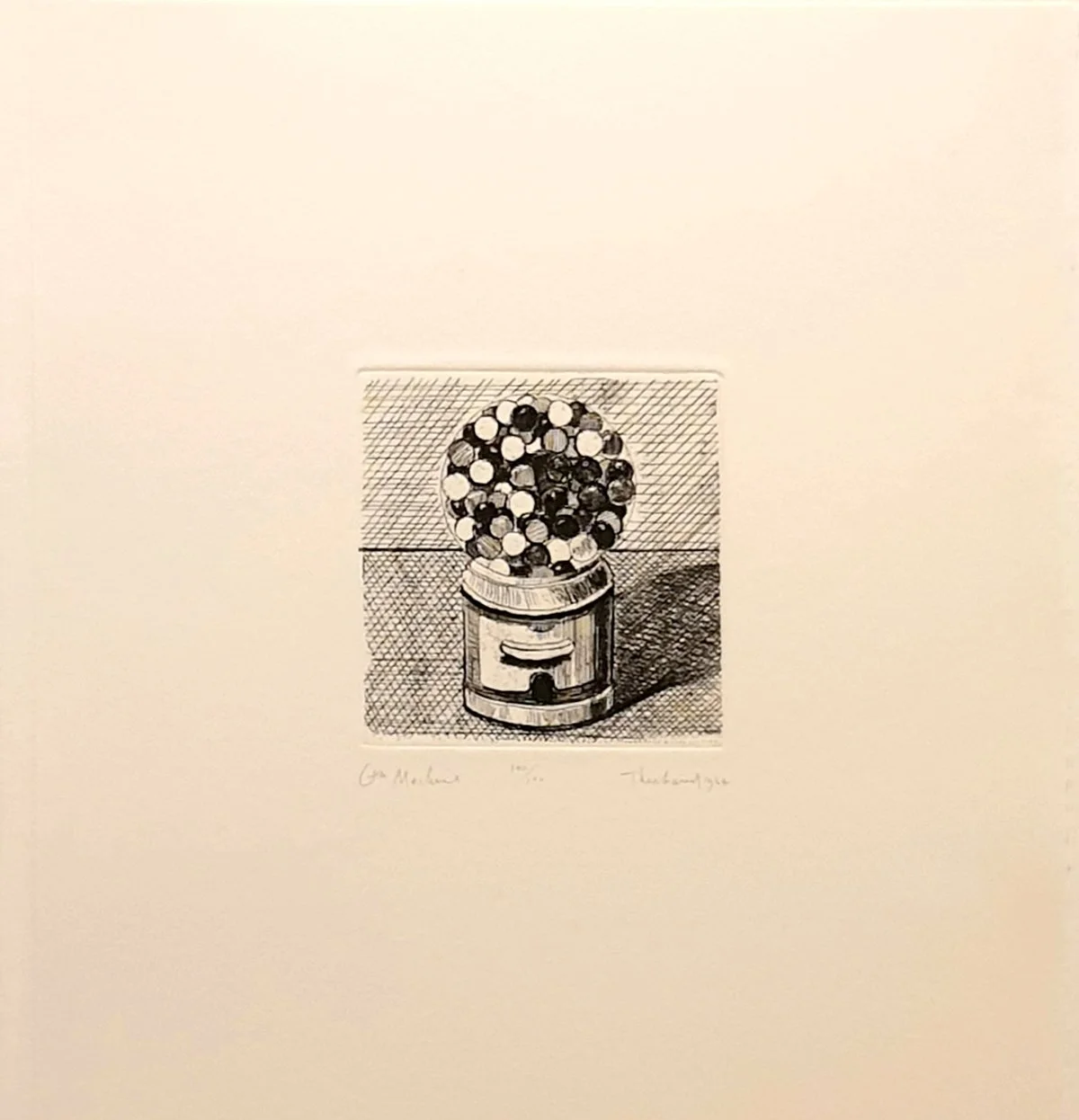
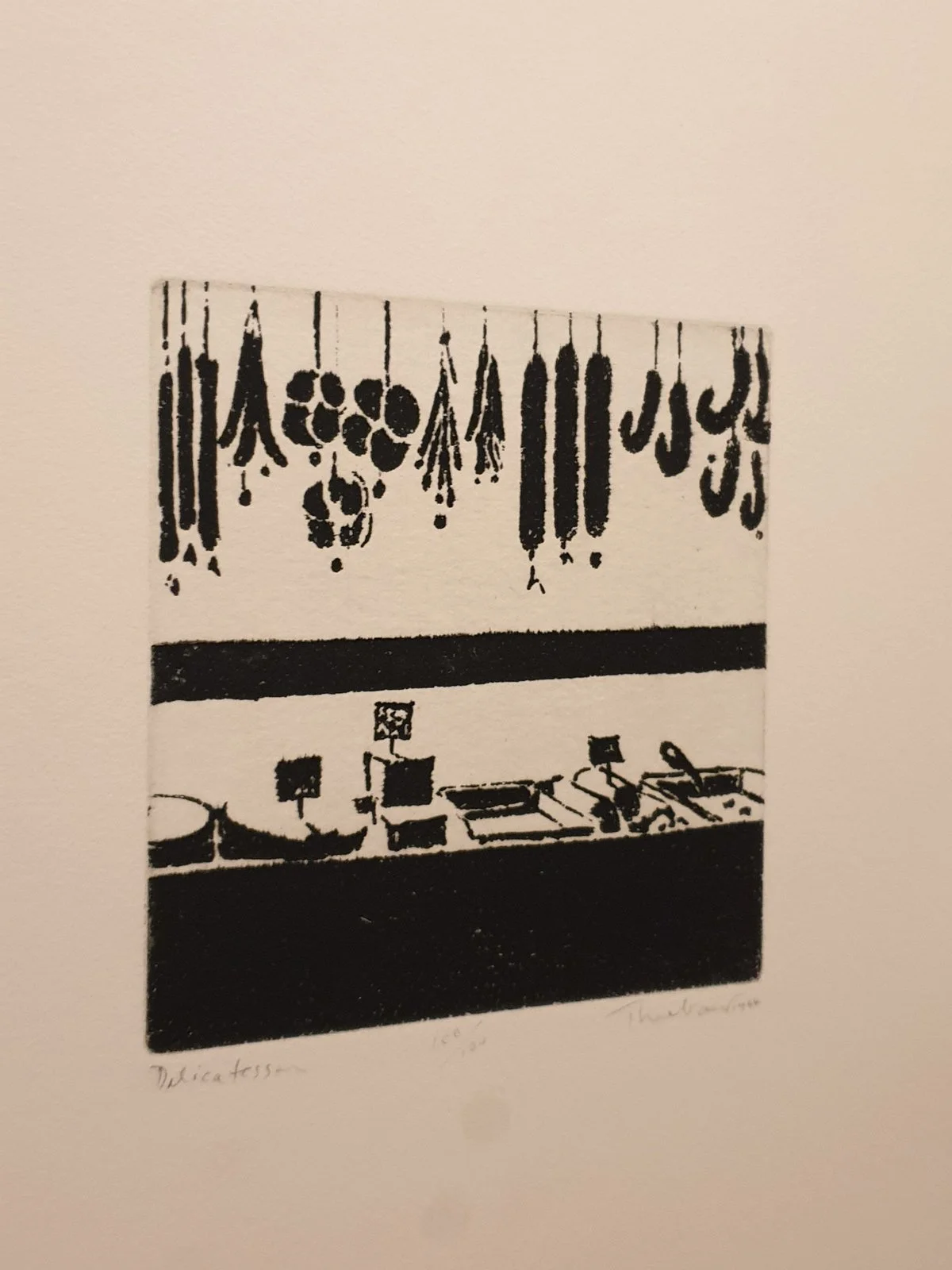
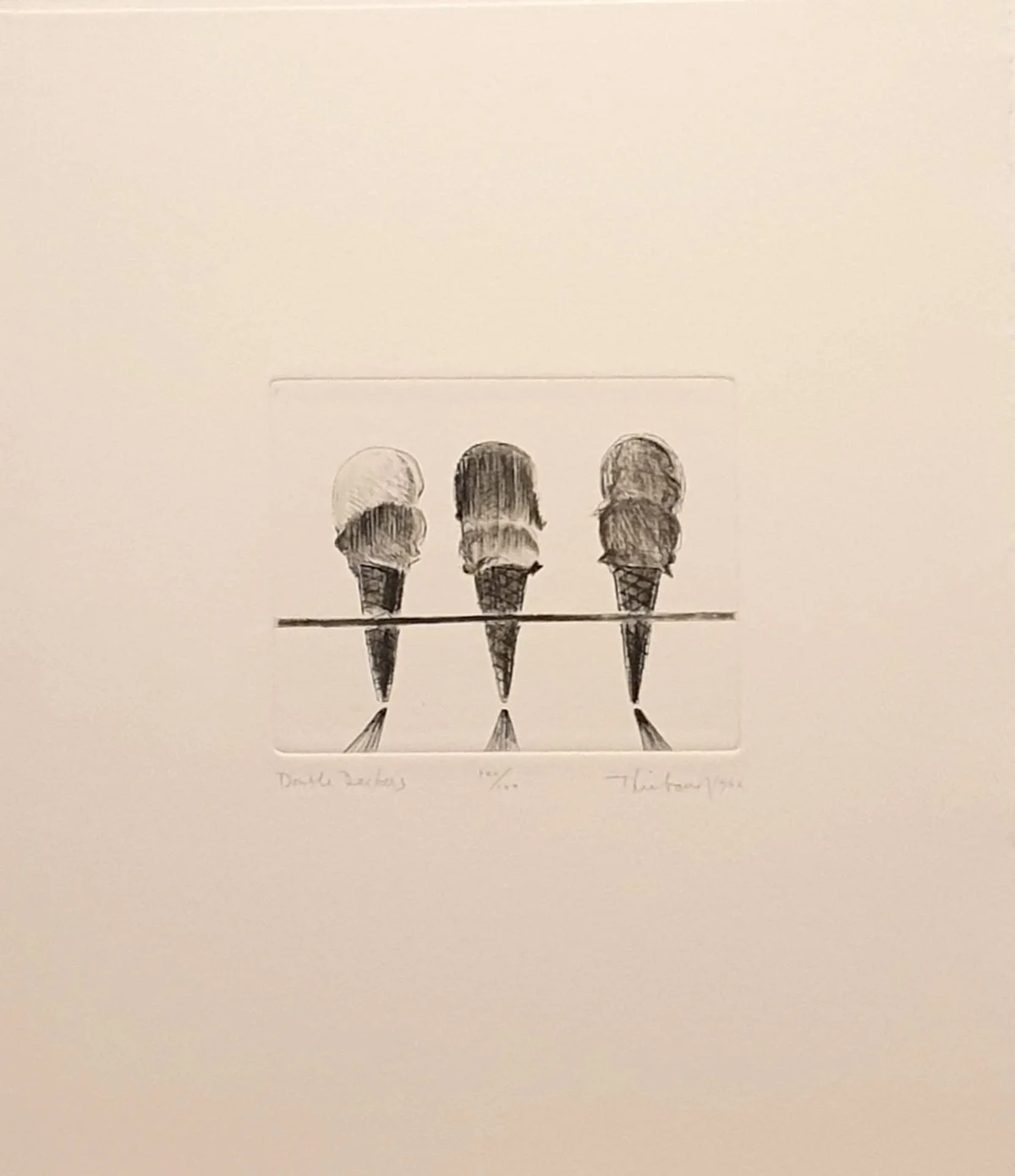
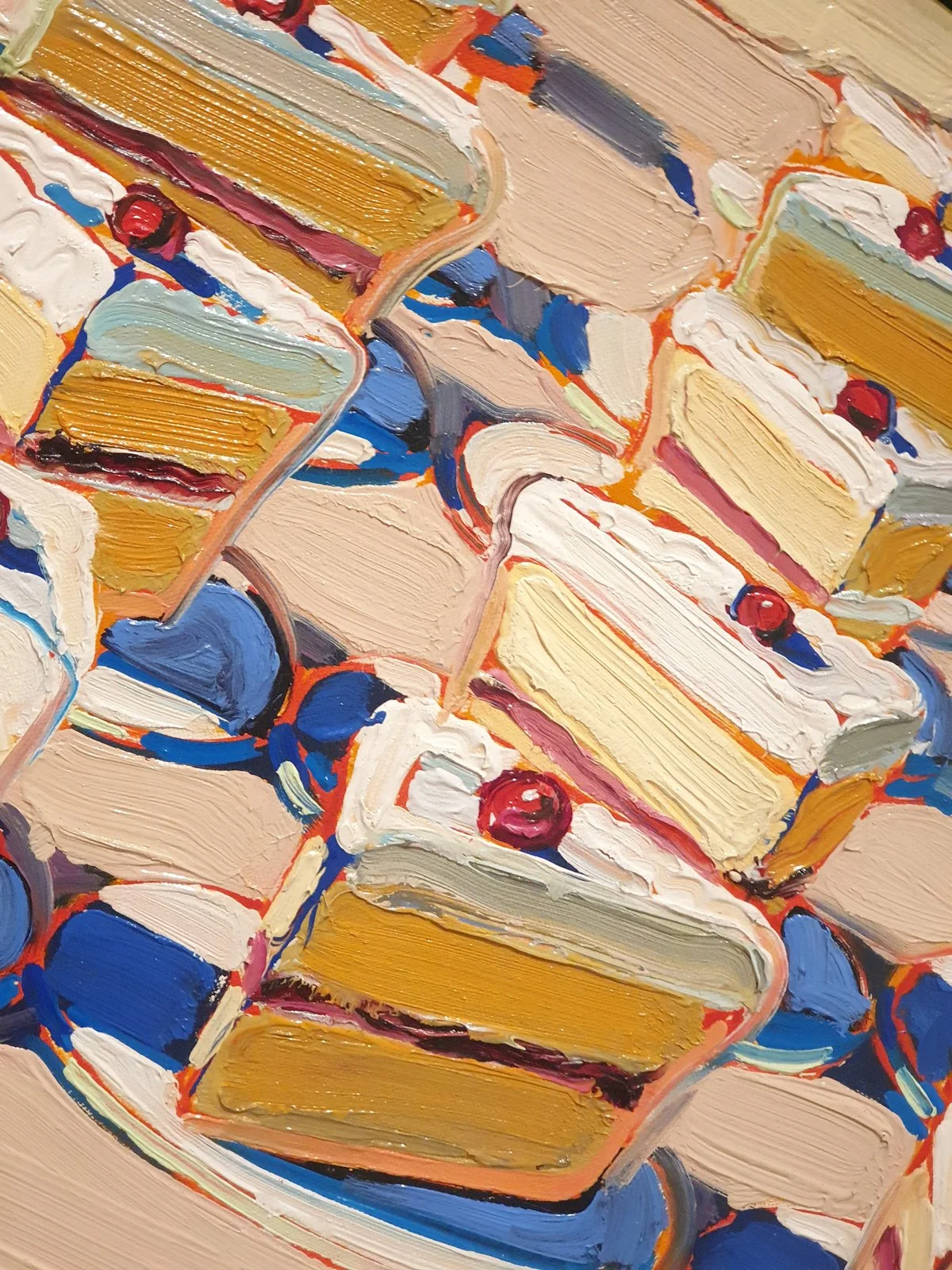
Although Thiebaud is one of the more well-known American painters, I wasn’t familiar with his work before this exhibition. Seeing it for the first time was a real pleasure! His paintings feel attractive and even “delicious” (a word not often used for art, but it really fits here). At first glance, what impressed me most were the texture and clarity: shine, playfulness, and discipline all at once. The brushstrokes are strong and confident, with thick, generous layers of paint. Thiebaud didn’t hold back at all! The almost sculptural strokes create volume, and the “slices of cake” look like they’re covered in real cream, as if he briefly stepped into the role of a pastry chef. I especially loved the way he outlines objects with bright, multi-coloured contours, giving them freshness, energy, and personality.
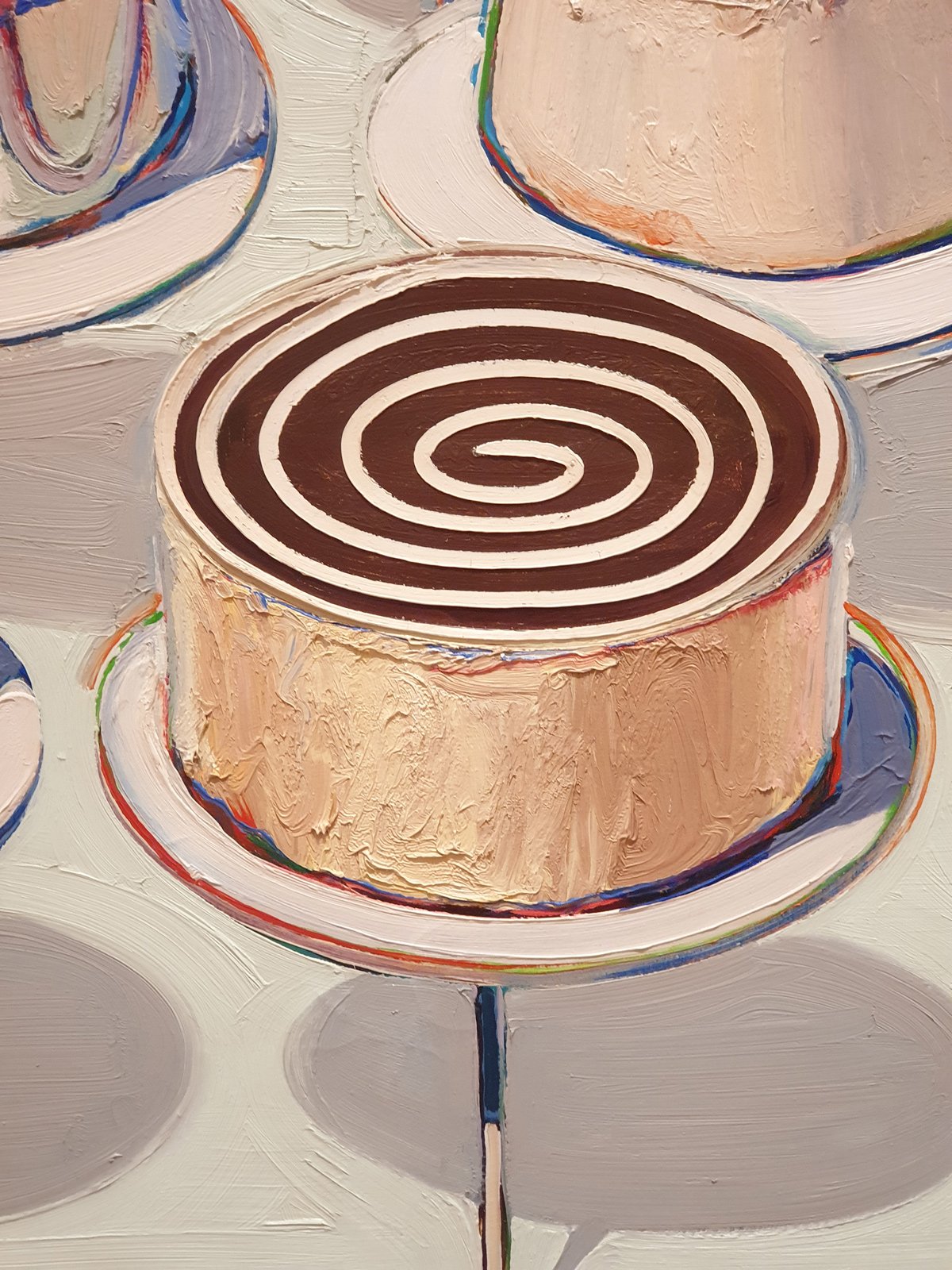
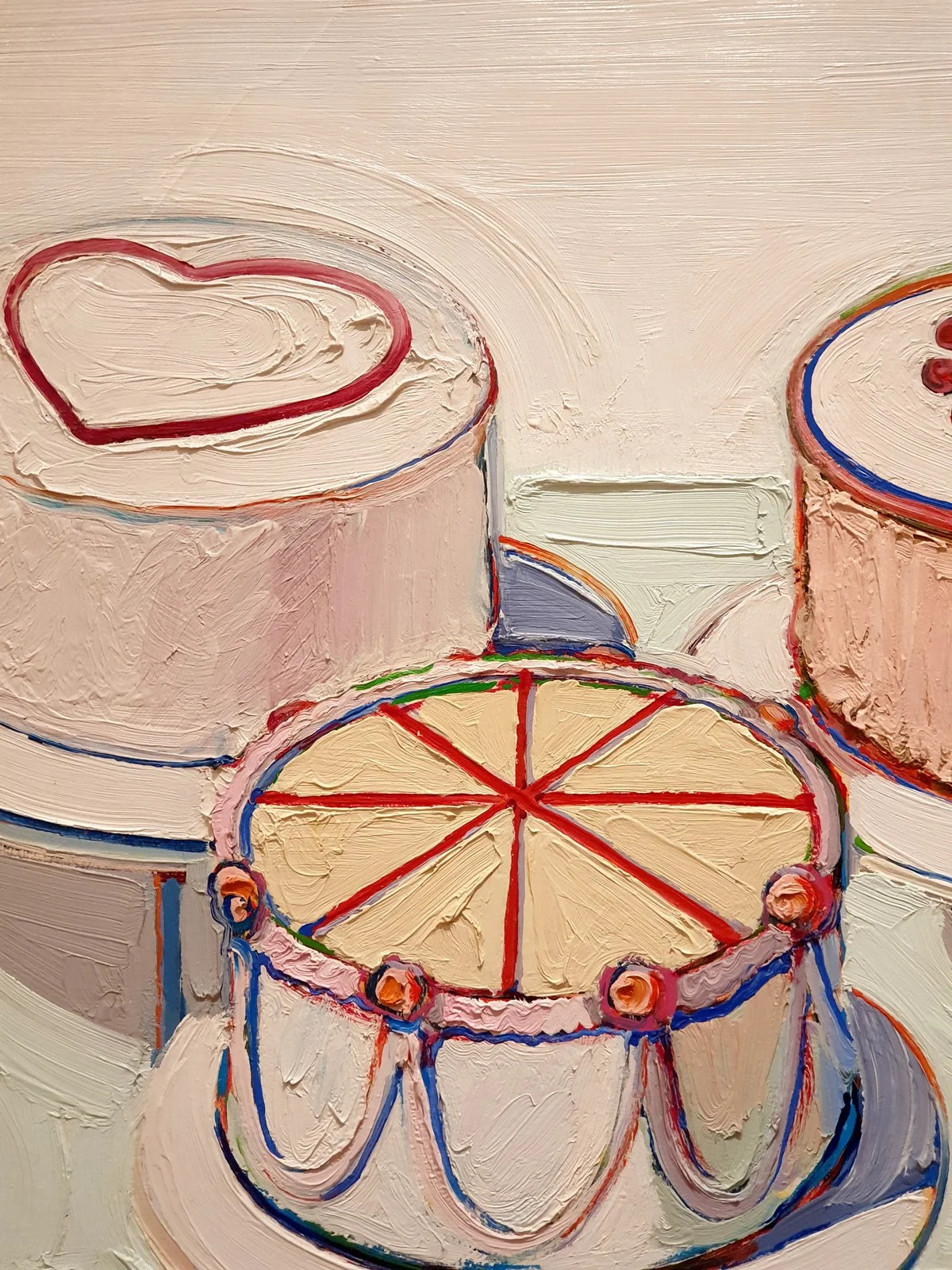
The exhibition includes many of the motifs Thiebaud is best known for: pies, cakes, ice cream cones, hot dogs, gumball machines, and pinball machines. These images are inspired by his childhood memories, when he worked in restaurants and spent time looking at food displayed in shop windows.
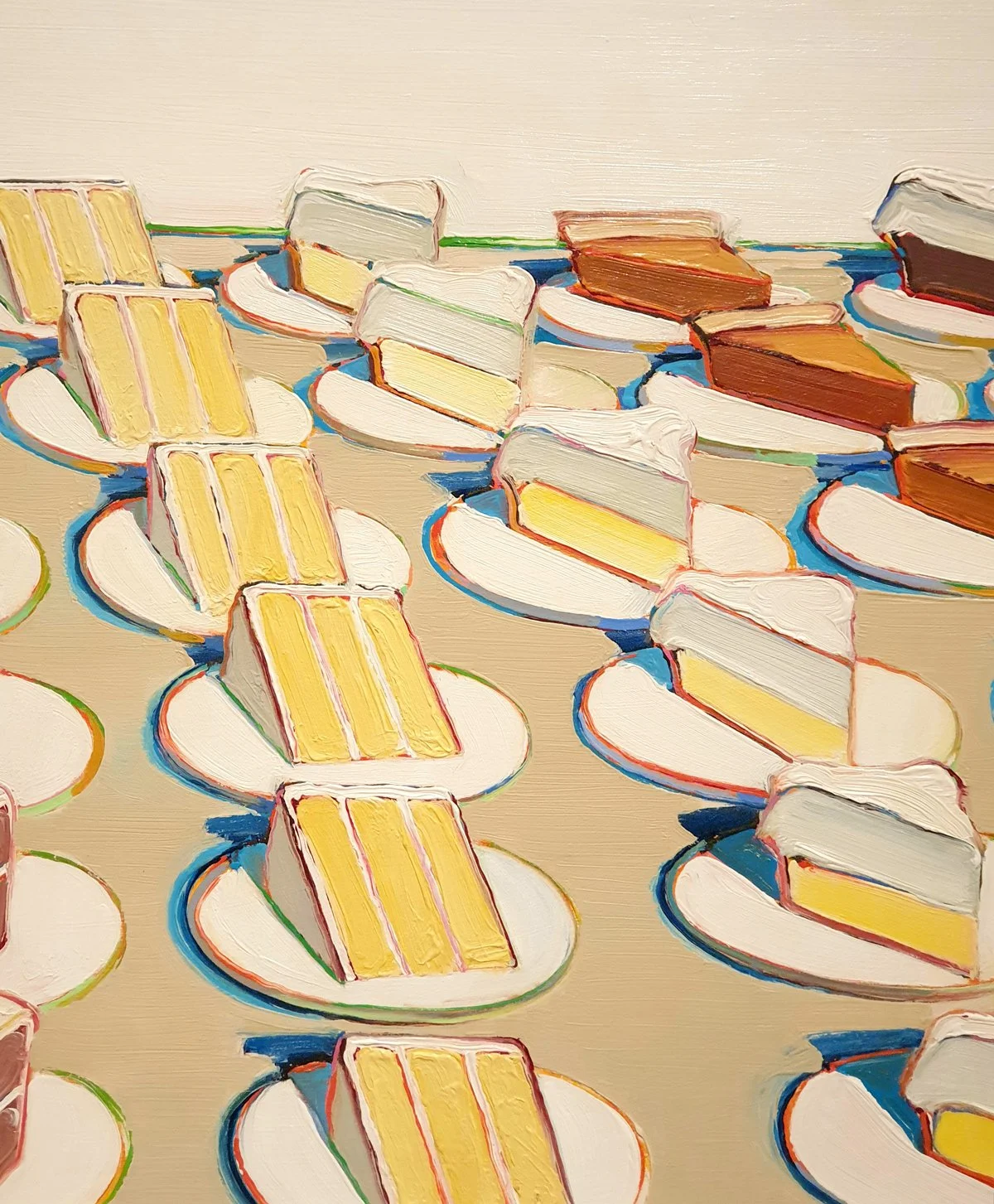
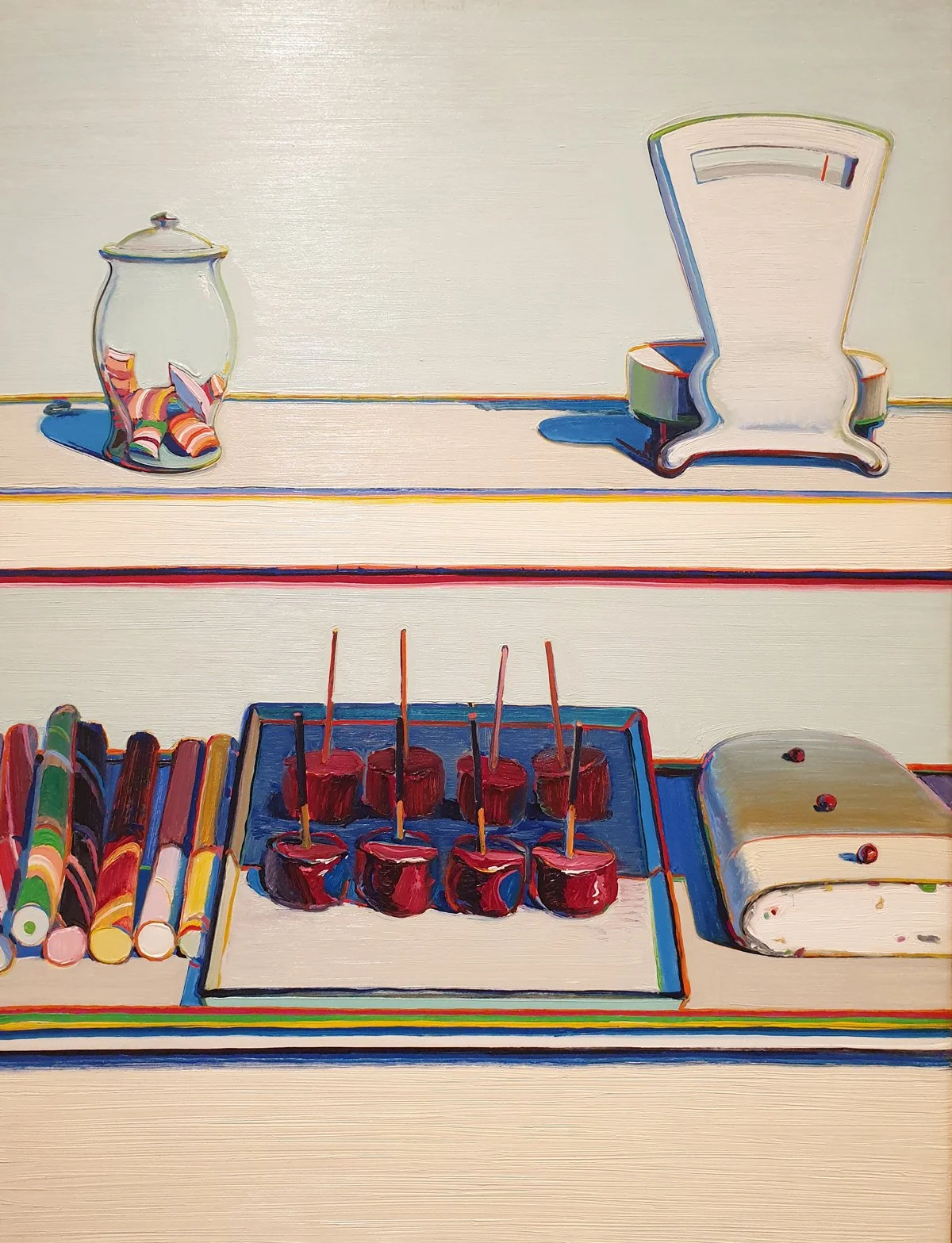
Thiebaud’s career took off in the early 1960s. In 1962, he participated in New Painting of Common Objects at the Pasadena Art Museum, one of the first major pop art exhibitions. Although he is often linked to pop art, Thiebaud didn’t really like being labelled that way. He wasn’t ironic; instead, he found beauty in everyday objects and food.
“From when I worked in restaurants I can remember seeing rows of pies, or a tin of pie with one piece out of it. Those little vedute, in fragmented circumstances, were always poetic to me.”
For Thiebaud, these subjects were serious and meaningful. He saw his work as a continuation of the European still life tradition, influenced by artists like Chardin, Manet, and Cézanne, but focused on American everyday life.
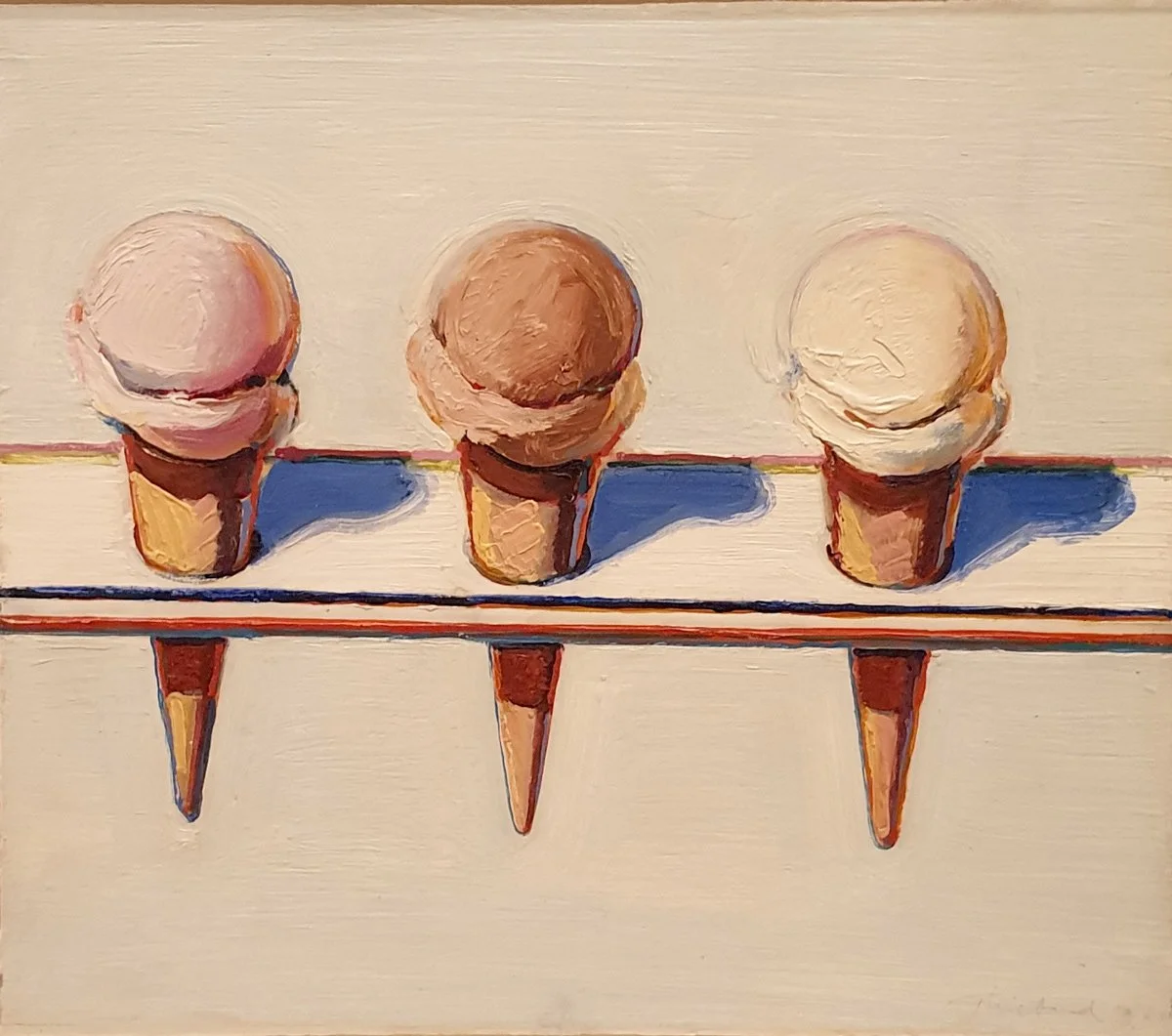
Three Cones, 1964
“The ice cream cone, for me, represents a kind of joy, a sort of temporariness… that very bright spirit that it once had, that kind of colour, light, liveliness, soon will be gone.”
I also came across information that one of his influences was Morandi, which makes sense to me: while Thiebaud uses a much more vibrant palette, both share a careful, contemplative approach to objects. He also mentioned Mondrian as an influence, which is most visible in the way he structures his compositions.
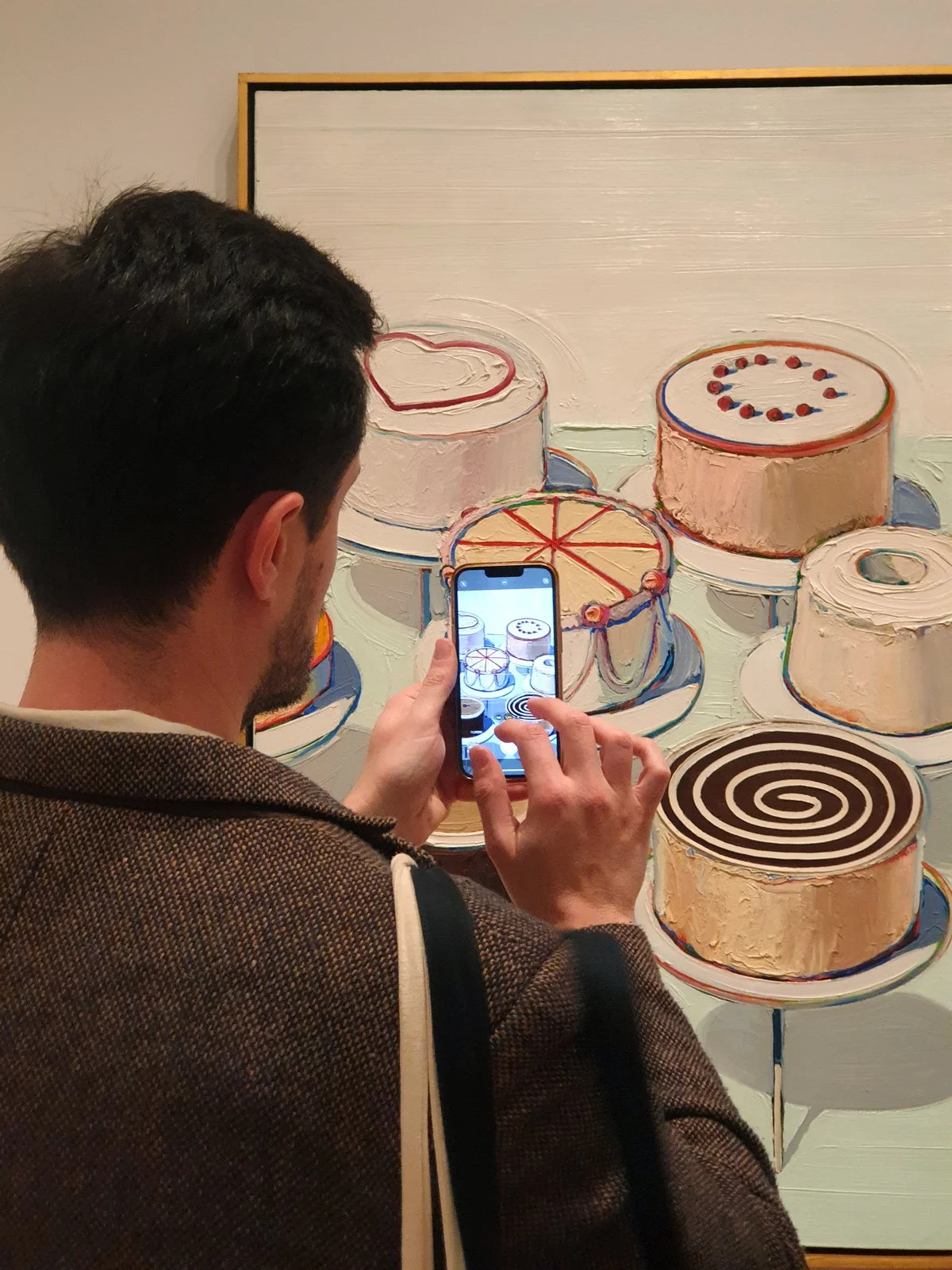
In the end, this exhibition opened my appetite — both for painting and for food. Since I couldn’t paint at that moment, Neven and I, of course, went out for cake! It also made me think about bringing more texture into my own painting, at least as an experiment: letting go a bit, using thicker paint, and giving everyday objects more importance again.
After the exhibition, we spent some time in the gallery shop, where there were several Thiebaud books to choose from, and it wasn’t easy to decide. We ended up buying two, so we can continue enjoying his work at home and learn more about the artist.
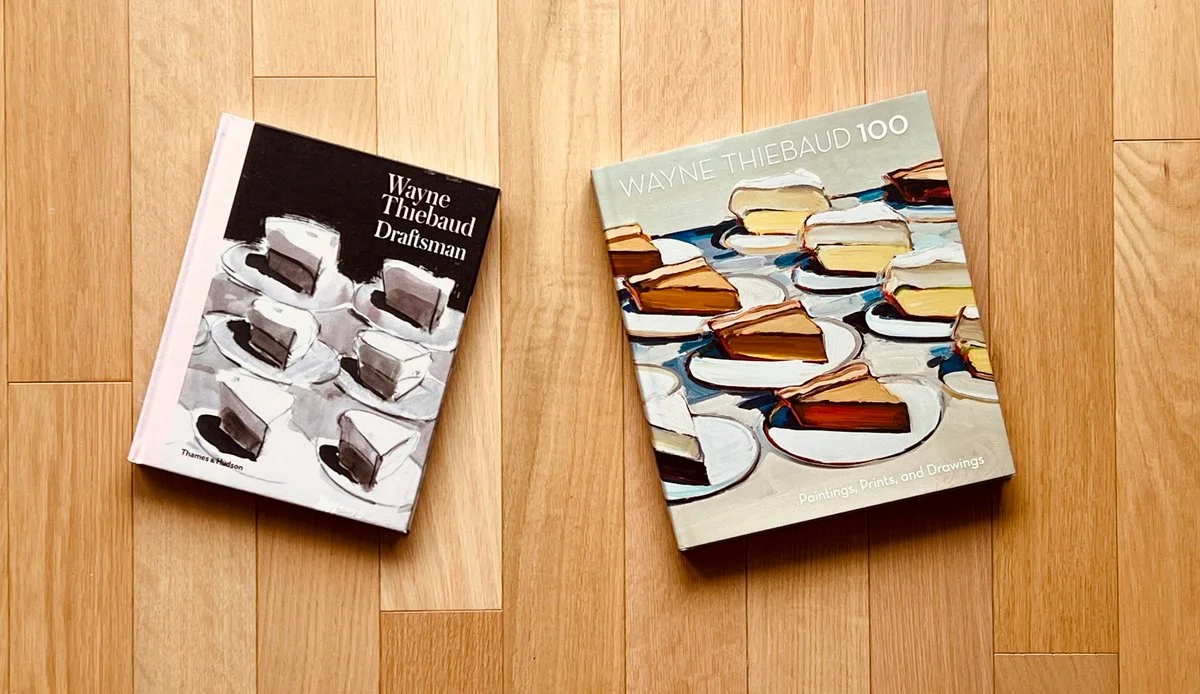
Wayne Thiebaud Draftsman by Isabelle Dervaux, Publisher: Thames & Hudson, published to accompany the exhibition Wayne Thiebaud, Draftsman organized by the Morgan Library & Museum, 2018 (left)
Wayne Thiebaud 100 by Scott A. Shields with essays by Margaretta Markle Lovell, PhD, Hearne Pardee, Julia Friedman, PhD chronology by Mary Okin, Publisher: Pomegranate Communications, 2020 (right)